
John Blee and the Rilkean Imperative of Painting
There are artists whose presence enters our lives through museums and books, and there are others who shape us quietly over time, through conversations in the studio, through generous guidance, and through teaching us new ways of seeing the world. John Blee has been such a presence in my life.
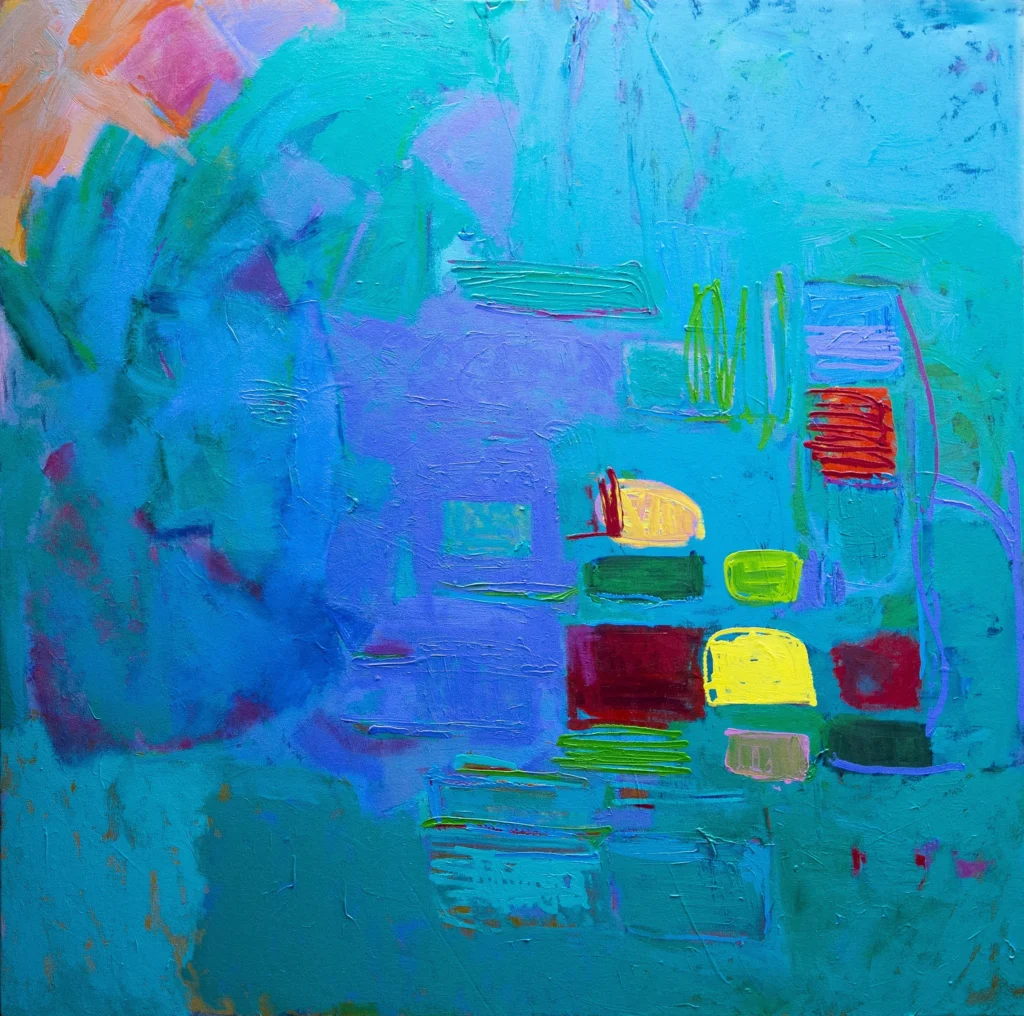
For nearly two decades, John Blee has occupied the latter role in my own artistic formation. Initially encountered as an instructor at The Art League in Alexandria, Virginia, he became over time less a teacher in the conventional sense than an interlocutor in an ongoing discussion concerning painting’s capacity to function as a vehicle for psychic integration, metaphysical inquiry, and joy.
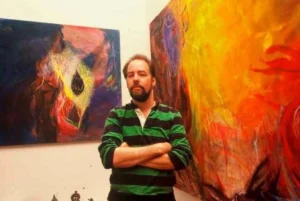
Blee’s biography resists the familiar narratives of postwar American abstraction. Raised in India and Pakistan in a diplomatic family, he absorbed visual cultures whose chromatic and spiritual sensibilities differ substantially from the genealogies typically invoked in discussions of Abstract Expressionism. Although he later studied with Helen Frankenthaler and Robert Moskowitz, Blee’s work is not easily assimilated into the dominant narratives of formalist abstraction descending from Clement Greenberg’s account of opticality. Rather, his paintings emerge from an unusually heterogeneous constellation of influences: Chola bronzes, Ajanta murals, Indian metaphysics, French Symbolist poetry, late Monet, and above all the writings of Rainer Maria Rilke.
To understand Blee’s paintings merely through the language of colorism or lyrical abstraction would be to overlook their underlying ambition. His work appears less invested in solving formal problems than in articulating states of consciousness. During our conversations, Blee repeatedly returned to the idea that painting constituted a “metaphysical meal,” an activity as essential to psychic existence as nourishment itself. He speaks of art not as production but as reintegration, a process through which emotional, spiritual, and even precognitive experiences may be metabolized into visual form.
If there is a literary analogue to Blee’s project, it is undoubtedly Rilke.
Blee began reading Rilke at sixteen and continues to regard him not simply as a poet but as a companion in the difficult task of defining an artistic life. Significantly, his engagement extends beyond the familiar Letters to a Young Poet toward the more demanding terrain of the Duino Elegies and the Sonnets to Orpheus. He describes his early ambition as an attempt to attain “the space of the Elegies” through painting—a striking formulation that suggests not illustration but structural affinity. The question is not how poetry might be represented pictorially, but how painting might occupy a similar ontological register.
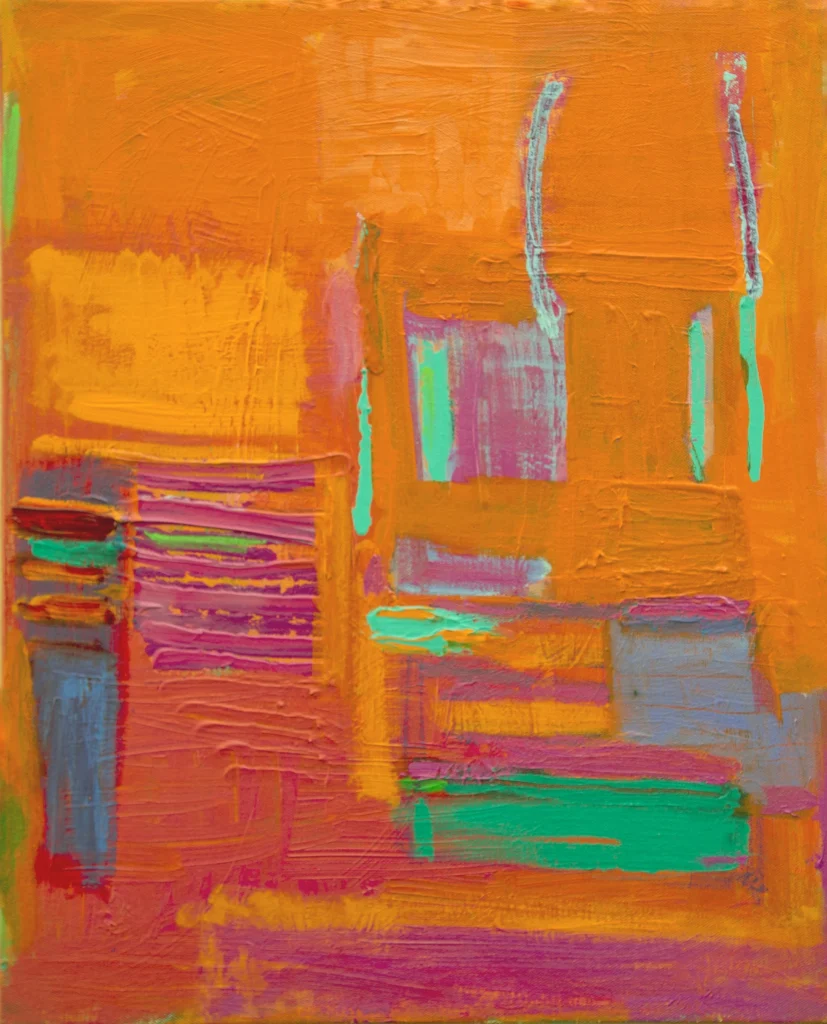
The correspondence between Blee and Rilke is perhaps most palpable in their shared commitment to transformation as an artistic imperative. Rilke’s oft-cited injunction to “live the questions” finds an echo in Blee’s conviction that an artist’s work should eventually become an answer to a life lived attentively. Painting, in this account, is neither decorative nor rhetorical. It is an inquiry conducted materially through color, duration, and perceptual openness.
This emphasis distinguishes Blee from much contemporary abstraction, which frequently oscillates between market-driven decorativeness and theoretical self-consciousness. Blee himself has expressed skepticism toward painting that remains merely pleasing. What matters for him is whether a work can penetrate into what he calls “the deeper part” of experience, articulating dimensions of selfhood that remain inaccessible to ordinary discourse. Here, one is reminded of Rilke’s insistence that artistic practice is less an exercise in expression than a discipline of becoming.
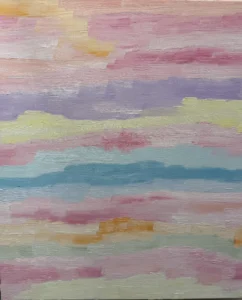
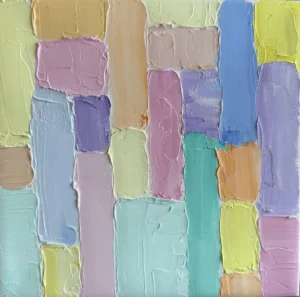
Perhaps the most compelling aspect of Blee’s recent reflections concerns joy. While preparing for an exhibition in Paris in 2007, he experienced an unexpected realization: entering his studio, he felt joy emanating from the paintings themselves. Since then, joy has become a criterion through which he judges his own work. Blee’s insistence on joy is particularly striking. He conceives of joy not as an escape from life’s difficulties, but as a form of illumination attained through attentive engagement with solitude, aging, uncertainty, and the ongoing work of self-understanding. In this respect, his reflections resonate with Rilke’s vision of artistic practice as an act of affirmation, capable of transforming experience into a source of inner luminosity. Color functions within this framework less as a formal element than as an event. Blee describes each new chromatic encounter as entering an unfamiliar territory. The comparison is apt. His paintings propose color as an exploratory field whose purpose is not descriptive representation but renewal. To paint is to encounter the possibility that something genuinely unforeseen may still emerge.
At a moment when abstraction often appears exhausted by its own historical repetitions, Blee offers a quieter proposition. Painting may still serve as an instrument of attention, a means of sustaining contact with experiences that evade both language and ideology. In this sense, his work remains fundamentally Rilkean. It is animated by the conviction that art’s highest task is neither to explain nor to persuade, but to prepare the conditions under which transformation becomes imaginable.
For Blee, as for Rilke, the artwork does not resolve the questions of existence; rather, it offers us a luminous space in which to dwell with them, allowing them to deepen, unfold, and ultimately become part of our own inner journey.
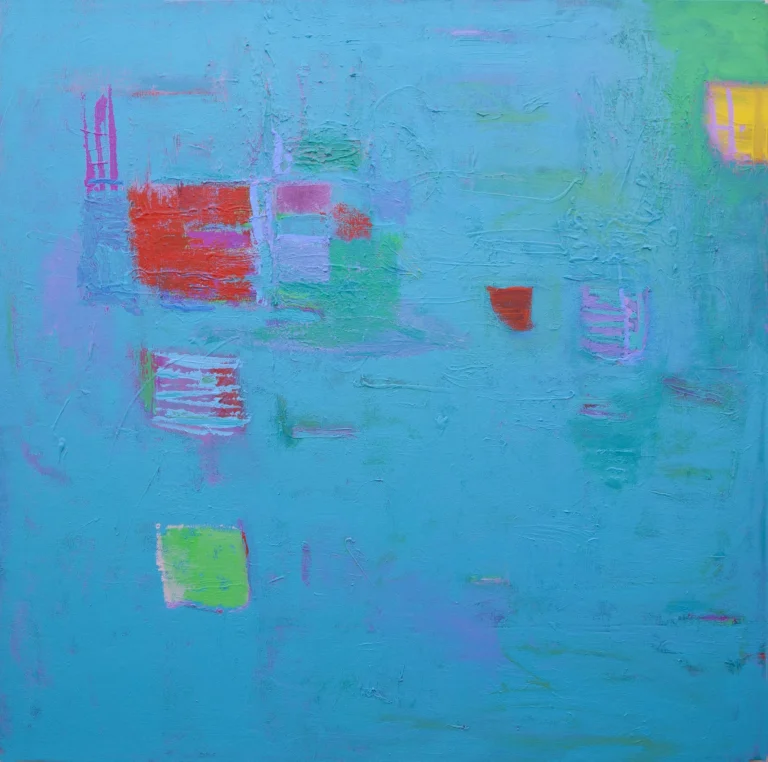
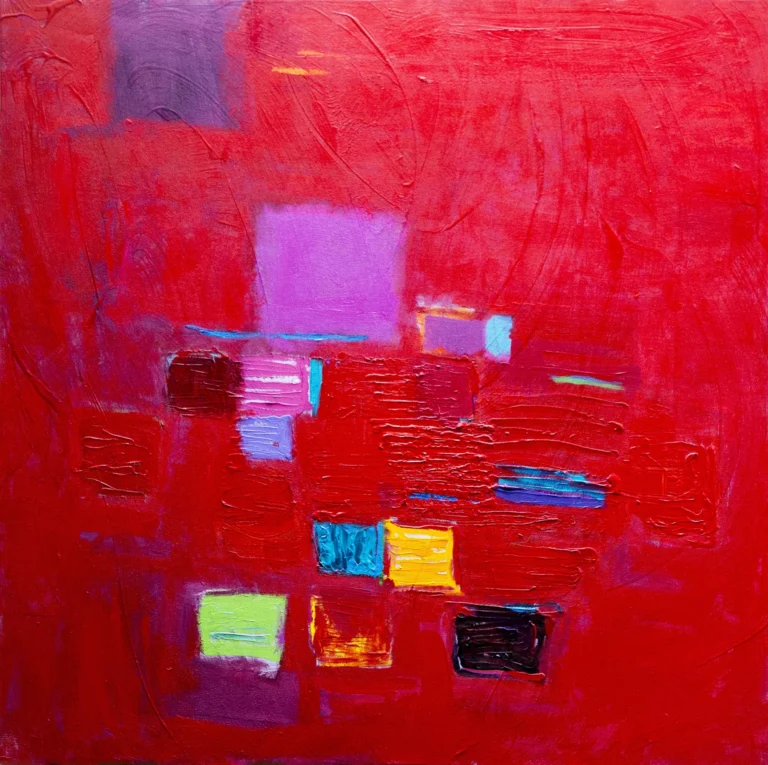
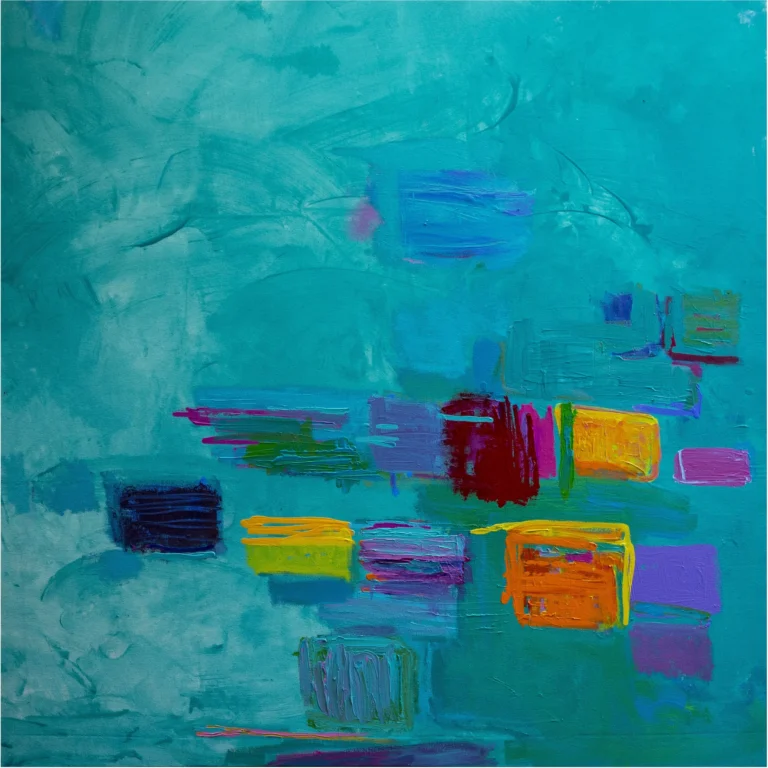
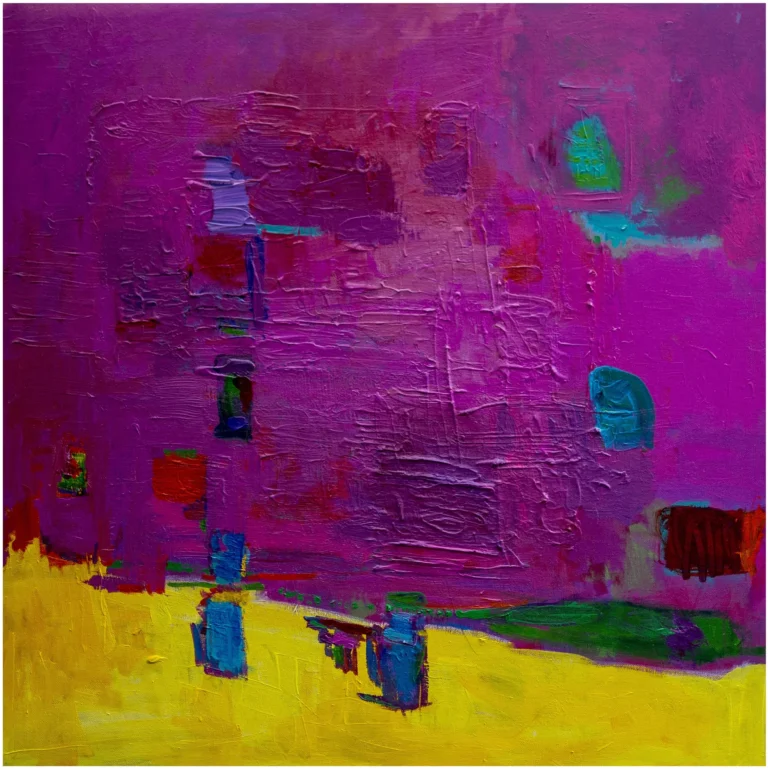
More paintings by John Blee
Continue reading
Other voices · In conversation
- As I go1 MIN
- No Map for This1 MIN
- After The Pain1 MIN